
DECK INSTALLATION | REMODELING | REMOVALS
When remodeling a deck, you must first determine if the existing structural frame is sound enough to support new materials. Key considerations include your budget, the deck’s intended purpose, material choices (such as wood vs. composite), and adherence to local building codes.
SERVICE DETAILS
Remodeling a bathroom requires balancing aesthetic goals with functional requirements, such as moisture control, storage, and accessibility. Key considerations include establishing a realistic budget with a 10–20% contingency for hidden issues such as water damage, and deciding whether to maintain the existing layout to avoid significant plumbing and electrical costs.
- Frame Integrity: Check for rot, cracks, or sagging in joists, beams, posts, and footings.
- Ledger Board: Verify it is securely flashed and bolted to the house to prevent water intrusion and structural failure.
- Joist Spacing: If transitioning from wood to heavier composite decking, existing 24-inch on-center spacing may need to be “sistered” or reduced to 12 or 16 inches to prevent “spongy” floors.
- Safety Hazards: Look for loose railings, unstable stairs, or rusted/corroded fasteners.
- Zoning: Use multi-level designs to create distinct areas for dining, lounging, or grilling.
- Purpose: Define your primary use (e.g., entertaining guests, a quiet retreat) to decide on the layout and features, such as built-in seating or planters.
- Environmental Factors: Consider sun exposure and wind. You may want to integrate shade structures like pergolas or awnings.
- Modern Aesthetics: Current trends for 2026 favor clean lines, minimalist black aluminum or cable railings, and earth-toned color palettes like light browns and warm grays.
- Wood: Generally less expensive initially but requires regular staining and sealing every 1–2 years to prevent rot.
- Composite/PVC: Higher upfront cost but offers low maintenance, resists rot, moisture, and UV damage, and can last 30 to 50 years.
- Fasteners: Use stainless steel or other corrosion-resistant fasteners, which can last over 50 years.
- Renovation vs. Replacement: Remodeling is often more budget-friendly than a complete overhaul, but if significant structural repairs are needed, the cost gap narrows quickly.
- Permits: Most jurisdictions require permits for deck construction. Failures can lead to fines or being forced to dismantle the project. Some areas exempt unattached decks that are below a certain height (e.g., 20 inches) or square footage.
- Timeline: Most decks can be completed in 1–3 weeks, though supply chain issues can add delays.
- Professionals vs. DIY: While DIY can save money, hiring professionals ensures compliance with building codes and high-quality workmanship.
Regular upkeep extends your deck’s lifespan.
- Annual Tasks: Plan for a full inspection and deep cleaning to remove dirt, mold, and mildew.
- Cleaning Tools: Use soft-bristle brushes for composite to avoid scratching. Power washers should be set to a maximum of 1,500 PSI to protect materials.
DEFINING DECK RENOVATION: RESTORING FUNCTION AND STRENGTH
Deck renovation focuses on repair and upkeep.
It aims to extend the deck’s lifespan. Typical tasks include cleaning, replacing boards, and reinforcing structures. Renovation enhances safety and functionality. This approach is best for worn but stable decks.
The goal is to restore, not reinvent.
- Routine Cleaning: Dirt and grime build up. Cleaning prepares surfaces for repair.
- Replacing Boards: Weak boards impact stability. Replacements restore strength.
- Reinforcing Structure: Strong supports increase durability. This ensures a solid deck.
- Adding Finishes: Protective layers guard against the weather. Finishes keep decks looking fresh.
Renovation maintains the deck’s original purpose. It focuses on practical repairs and upkeep.
Exploring Deck Remodeling: Expanding Possibilities
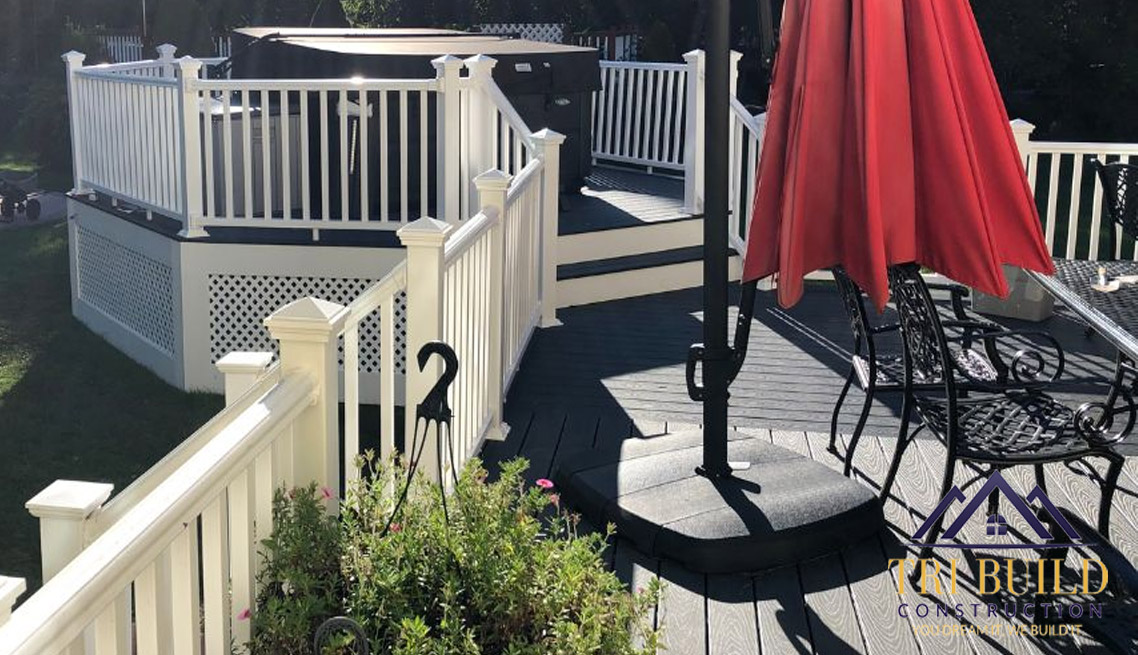
Deck remodeling involves extensive changes. It can include redesign, feature additions, and layout updates. Remodeling aims to transform the deck’s appearance and utility. It allows for modern designs and personal preferences. This approach is ideal for those seeking a custom look.
- Adding Features: Built-in seating enhances comfort. Shade structures add function.
- Updating Layouts: Layout changes increase space. Open areas create flexibility.
- Upgrading Railings: Stylish railings modernize decks. Safety features add value.
- Using New Materials: Alternative materials improve durability. These options offer a unique look.
Remodeling lets you design the space to your taste. It’s a chance to fully personalize your deck.