
BATHROOM REMODELING
Everyone’s ideal kitchen is different. Is yours a 24-hour family hangout, a dazzling chef’s haven, or a show-stopper for entertaining?
SERVICE DETAILS
Remodeling a bathroom requires balancing aesthetic goals with functional requirements, such as moisture control, storage, and accessibility. Key considerations include establishing a realistic budget with a 10–20% contingency for hidden issues such as water damage, and deciding whether to maintain the existing layout to avoid significant plumbing and electrical costs.
- Budget Range: Homeowners typically spend between 5% and 10% of their home’s value on a bathroom remodel. Mid-range projects average around $24,000, while high-end renovations can exceed $60,000.
- Contingencies: It is critical to set aside 10% to 20% of the total budget for “unknown unknowns” that may be discovered after demolition, such as mold, rot, or outdated wiring.
- Cost Drivers: Changing the floor plan or moving major plumbing lines (like a toilet drain) can add thousands to the project cost
Functionality should be prioritized to ensure the space works for daily routines.
- Plumbing and Electrical: Assess if existing systems can handle new fixtures. High-flow “shower towers” may require upgrading water lines from 0.5-inch to 0.75-inch or installing a larger water heater.
- Ventilation: Proper ventilation is vital to prevent mold and moisture damage. Install a ducted exhaust fan rated for at least 50 cubic feet per minute (CFM) for standard bathrooms.
- Storage: Maximize space with built-in niches in showers, recessed medicine cabinets, or floating vanities with deep drawers to keep surfaces clear.
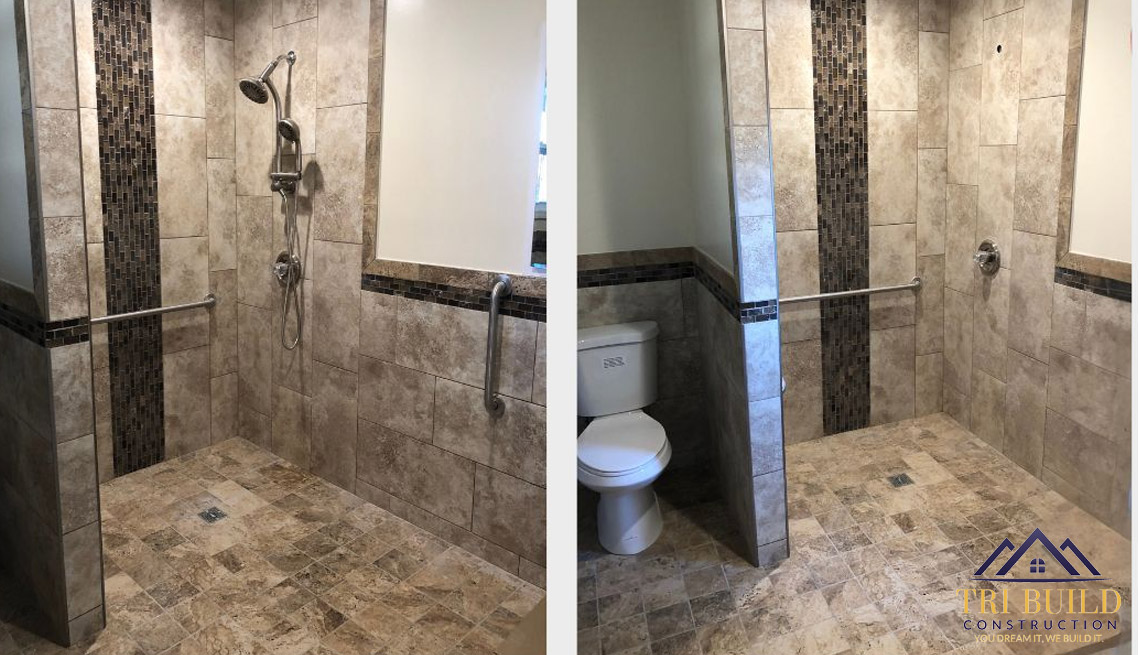
- Accessibility: Consider “universal design” features such as walk-in, curbless showers, grab bars (now available in stylish finishes), and comfort-height toilets for long-term usability.
- Color Palette: Cool grays are being replaced by warm whites, taupe, terracotta, and muted greens like sage.
- Materials: Porcelain tile is highly recommended for its durability and low moisture absorption. Natural stone-inspired tiles (limestone, travertine) and quartz countertops are popular for their longevity and aesthetic appeal.
- Lighting: Use layered lighting, including ambient (overhead), task (flanking the mirror at eye level to avoid shadows), and accent (LED strips under vanities or in niches).
- Focal Points: Design the layout so the first thing seen upon entering is a focal point, such as a striking mirror, a freestanding tub, or a decorative window.
THINGS TO CONSIDER!
Set a realistic budget that includes a 15% buffer for hidden issues like water damage or outdated plumbing. Prioritize a layout that keeps existing plumbing lines in place to save thousands on labor and permit costs. Ensure your plan includes high-quality ventilation and layered lighting to prevent mold and eliminate harsh shadows.
Choose durable materials like porcelain tile with a slip-resistant finish to balance style with long-term safety. Finally, consider future-proofing with features such as a walk-in shower or a comfort-height toilet to increase your home’s long-term resale value.
- Age in Place: Consider “comfort-height” toilets, walk-in showers with zero-threshold entries, and installing blocking behind walls now so grab bars can be easily added later.
- Bathtub Strategy: While walk-in showers are popular, keep at least one bathtub in the house to maintain resale value for families with children.