


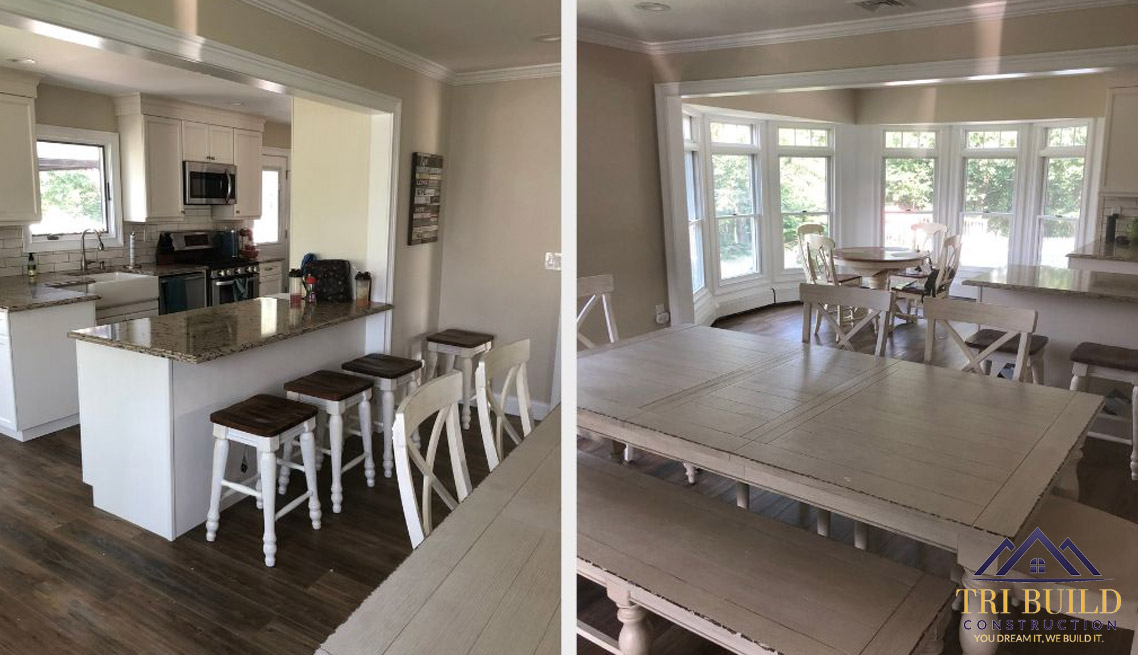
KITCHEN REMODELING
Everyone’s ideal kitchen is different. Is yours a 24-hour family hangout, a dazzling chef’s haven, or a show-stopper for entertaining?
SERVICE DETAILS
Home additions and extensions involve structurally expanding an existing residence to increase living space and property value. Services typically follow a design-build model, where a single team manages the project from initial architectural concepts through to final construction.
The layout is the foundation of kitchen function and should be tailored to your cooking habits.
- The Work Triangle: This design principle connects the three most used areas, the sink, stove, and refrigerator, to minimize unnecessary movement. Ideally, each leg of the triangle should be between 4 and 9 feet long, with a total perimeter under 26 feet.
- Aisle Width and Traffic Flow: Maintain at least 42 inches of clearance in work aisles for a single cook, or 48 inches for multiple cooks. Entryways should be at least 32 inches wide.
- Functional Zones: Group tasks into dedicated zones for preparation, cooking, cleaning, and storage to streamline activity
- Countertops: Quartz and granite are highly durable and heat-resistant; marble is elegant but more prone to staining.
- Flooring: Luxury Vinyl Plank (LVP), tile, and hardwood are popular for their durability against spills and foot traffic.
- Cabinets: Solid wood and high-quality plywood are preferred for longevity. If on a budget, consider refinishing or refacing existing cabinets.
- Countertop Heights: The ideal height is usually 2–4 inches below elbow height (typically 34–37 inches). Consider multi-level surfaces for different tasks, such as a lower surface for rolling dough.
- Storage Access: Prioritize deep drawers and pull-out shelves in base cabinets instead of standard doors to avoid excessive bending and reaching into deep corners.
- Appliance Placement: Wall-mounted ovens should ideally be at shoulder level to prevent bending. Dishwashers should be within 36 inches of the sink edge.
- Layered Lighting: Combine Ambient (general overhead), Task (under-cabinet and over-stove), and Accent lighting to enhance both mood and safety.
- Ventilation: Install an outdoor-venting range hood with a minimum flow of 150 cubic feet per minute (CFM) to remove moisture and odors.
- Electrical Safety: Ensure all countertop receptacles have GFCI (ground-fault circuit interrupter) protection.
- Hire Professionals: For structural changes, moving plumbing, or electrical work, hire licensed contractors.
- Temporary Setup: Create a makeshift kitchen in another room with essentials like a microwave, coffee maker, and mini-fridge to survive the 4–12 week construction period.
- Lead Times: Order appliances and custom materials early, as shipping delays on these items are common.
THINGS TO CONSIDER!
Homeowners typically choose between building “out” (expanding the footprint) or building “up” (adding a second story).
Second-Story Additions: These “pop-top” projects add significant space without consuming yard area, but require reinforcing the existing foundation to support the new weight.
Room Additions & Bump-outs: A full room addition extends the main level outward, while a “bump-out” is a smaller extension (typically 2–10 feet) that may not require a full foundation, saving 15–30% compared to conventional additions.
Dormers: Primarily used on Long Island to expand attic space and increase curb appeal, these projects typically take 4–12 weeks.
Specialized Suites: These include master suites and Accessory Dwelling Units for multi-generational living or rental income.
Functional Spaces: Kitchen expansions, sunrooms, mudrooms, and garage conversions are common ways to repurpose or add utility to a home.